Permian Period
299-252 million years ago
About this Period
Rise of early mammal ancestors
The Permian period saw the diversification of early reptiles and mammal ancestors, ending with the largest mass extinction in Earth's history.
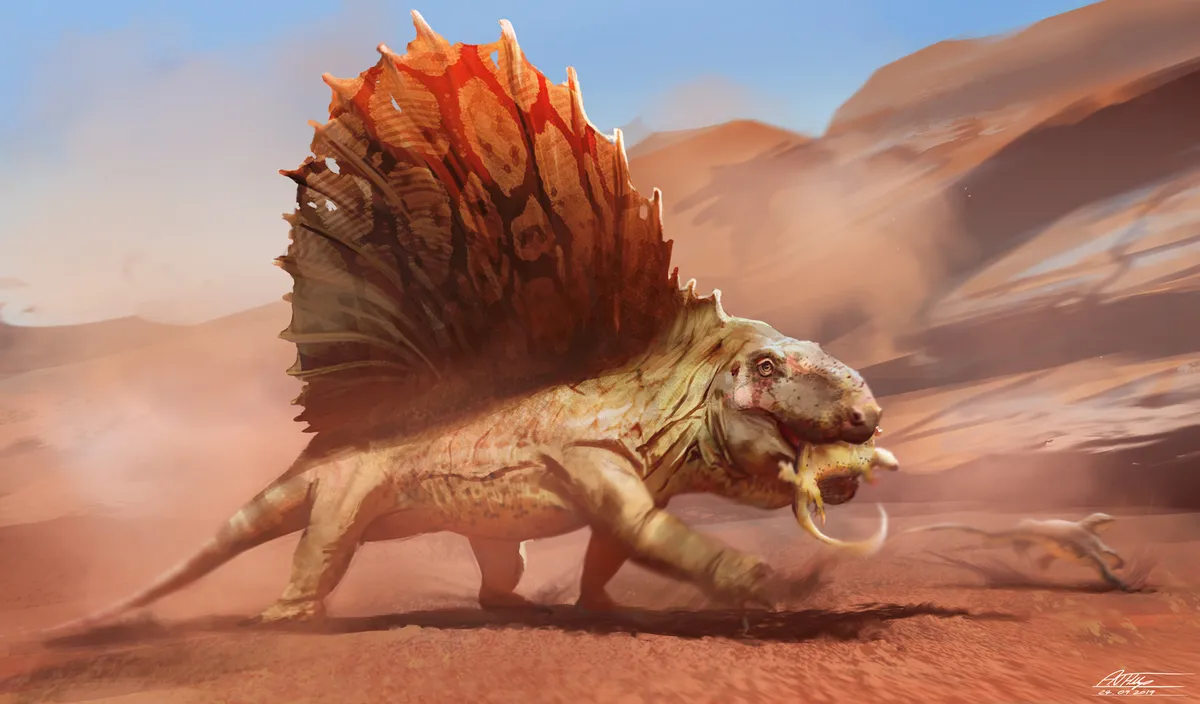
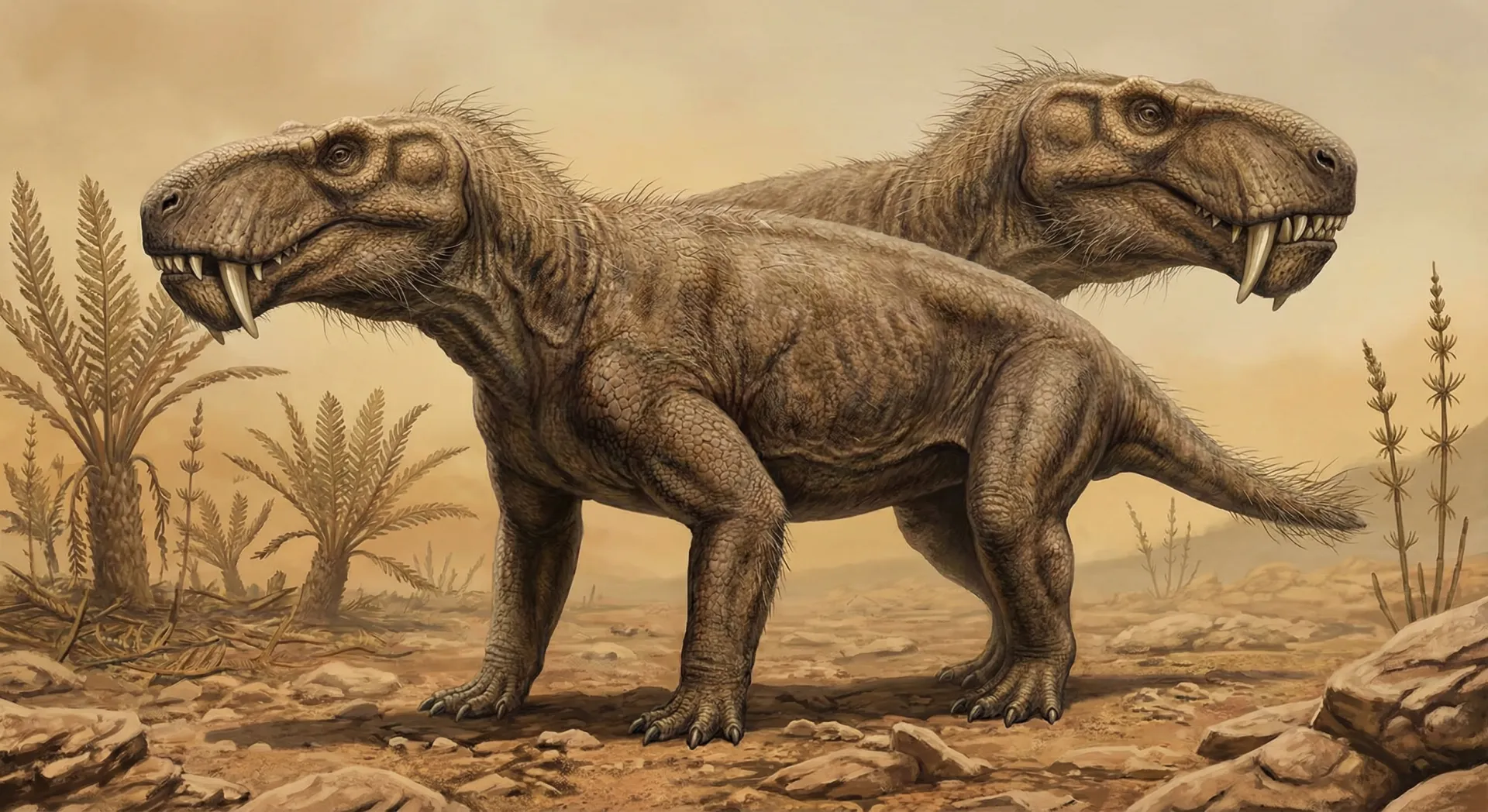
Synapsids (mammal-like reptiles) diversified dramatically, including famous creatures like sail-backed Dimetrodon, saber-toothed Gorgonopsids, and tusked Dicynodonts. These animals developed increasingly efficient locomotion and metabolism, foreshadowing the mammals to come.
This period also witnessed the formation of the supercontinent Pangaea, with its massive interior becoming extremely arid. Extensive desert conditions developed across much of the land.
The Permian ended catastrophically with the "Great Dying"—the largest mass extinction in Earth's history. Massive volcanic eruptions (the Siberian Traps), rapid climate change, and ocean acidification combined to eliminate about 95% of marine species and 70% of terrestrial vertebrate species. Recovery would take millions of years.
The Permian's catastrophic ending reset the evolutionary stage, opening opportunities for new groups—including the dinosaurs—to rise.